Mirígy
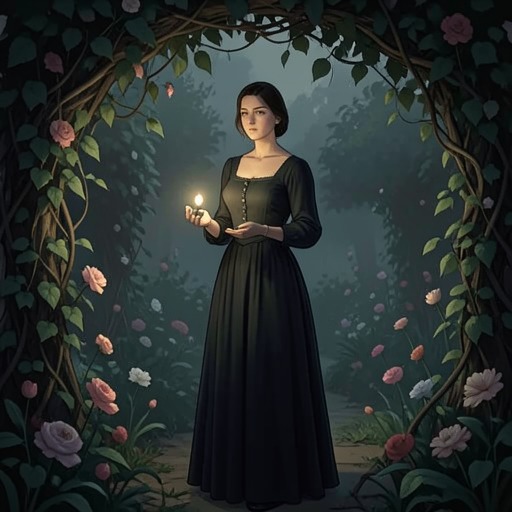
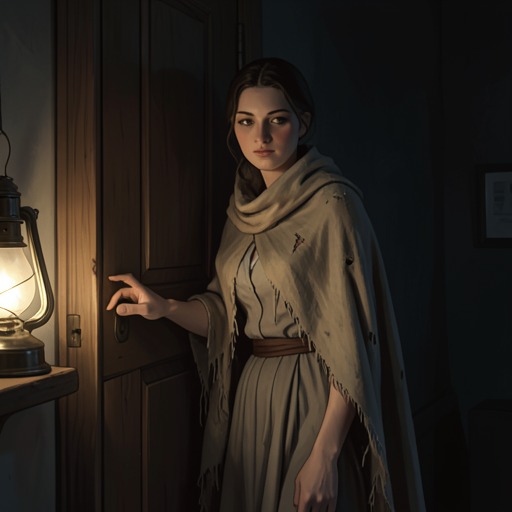
Csongor és TündeMirígy is the play’s witch, a recurring supernatural figure whose appearances bookend its world of enchantment and danger. The evidence identifies her as an old woman, places her at a blazing well, and gives her brief lines at several moments; it does not, on its own, establish the full course or outcome of her schemes.
Identity and Introduction
The dramatis personae identifies Mirígy as a witch. In her first cited appearance, she is also designated as old, an epithet that marks her as a figure of long-standing supernatural menace rather than introducing a separate character. Her name appears among the play’s principal characters, placing her alongside the central figures of its fairy-tale action.
The evidence also records her presence in a roll of characters that includes Tünde, Ilma, Ledér, and the fairies. This establishes her place in the play’s cast, but does not by itself specify the circumstances of her relationships with them. The available passages likewise do not describe her appearance, origins, powers, or motives in detail.
Brief Appearances and Speech
At one point Mirígy speaks after Kurrah asks what more is needed. Her reply begins by directing attention to a white dwelling. The exchange establishes her participation in the scene and shows her giving a prompt, but the supplied excerpt does not show what follows or explain the dwelling’s significance. The moment therefore supports a cautious reading of Mirígy as an active speaker within the supernatural plot, not a fuller account of a plan or its result.
A later stage direction gives her a striking entrance: Ilma throws a piece of cake into a well, which flares into a great blaze; Ilma runs away screaming, and Mirígy rises from the well after the flames. The staging joins the witch’s appearance to a sudden transformation of an ordinary object and a familiar place into a spectacle of fire. It also distinguishes the two women’s immediate responses: Ilma flees, while Mirígy emerges. No additional motive or explanation for the event is supplied in this passage.
On emerging, Mirígy says that she has completed her journey. The statement confirms that she has come from elsewhere or has undertaken a route, but the excerpt does not identify its destination or purpose. The contrast between her composed report and Ilma’s scream gives the entrance its dramatic force without establishing what Mirígy intends next.
Recurrence and Dramatic Function
Mirígy appears again in a later scene, where she addresses a crooked branch and speaks of where it might have grown in hell. The brief apostrophe gives the branch a place in her speech and draws on infernal imagery, reinforcing the play’s association of her with witchcraft and peril. The excerpt ends with her words and an exit direction; it does not reveal the branch’s use or the immediate consequence of her departure.
Across the cited moments, Mirígy’s entrances are associated with signals of disturbance: an ominous first introduction, a white dwelling raised as a question, a well that bursts into flame, and a branch addressed through the language of hell. These details give her a persistent supernatural presence, but the evidence here is fragmentary. It supports describing her as a witch whose brief appearances punctuate the action, while leaving her larger objectives, relationships, and eventual fate unresolved.